
India on the move - services, pharmaceuticals and jewelry
- Simon Kiwek

- 21. Okt. 2023
- 6 Min. Lesezeit
Aktualisiert: 9. Jan.
While the rest of the world suffers from the aftermath of the COVID-19 pandemic, India is experiencing an impressive economic renaissance. In the shadow of crises, India's young, dynamic generation is building a modern industry based on services and digital production.
The major Western economic blocs, the EU and the USA, are bobbing along, while emerging China is suffering from a crisis in the real estate markets and does not want to get going after the strictest of lockdowns. Numerous developing countries are suffering from the current difficult conditions of the global economy, and their recovery from the COVID-19 pandemic is delayed. In light of these crisis reports, India is emerging as the engine of the global economy in the next few years, alongside other major economies in South Asia such as Indonesia, Bangladesh, and the Philippines.
For a long time, Indians were overshadowed by China, home to the second-largest population on this planet. While China practically eradicated extreme poverty in its giant empire within a generation, India continued to suffer from a Hindu growth rate for a long time—a euphemism for particularly low growth rates until the which was attributed to the country's religious orientation. For a long time, India remained the poorhouse of the world, even ahead of sub-Saharan Africa in absolute numbers.
which was attributed to the country's religious orientation. For a long time, India remained the poorhouse of the world, even ahead of sub-Saharan Africa in absolute numbers.
the 1980s, which was attributed to the country's religious orientation. For a long time, India remained the poorhouse of the world, even ahead of sub-Saharan Africa in absolute numbers.
Abbildung 1: In the next few years, India will achieve the highest economic growth rates of all the major emerging economies. In the medium term, only Bangladesh and Vietnam will be ahead of India in relative terms.

With 7.2 percent in 2022, 6.3 each in 2023, and 2024, it will outpace all other growth candidates in the region in the short term, with only Bangladesh growing more. The International Monetary Fund agrees with the forecasts of other institutions, such as the Asian Development Bank or the World Bank. With its sheer size of 1.4 billion people, the giant country will occupy a crucial place in the global economy in the coming years. As early as 2022, India would displace the United Kingdom from fifth place among the largest economies.
An Indian middle class in the making
Abbildung 2: Although very successful in poverty reduction, India still lags behind other countries such as Bangladesh and Pakistan, according to World Bank data. In absolute numbers, however, 135 million people have been lifted out of poverty.

A major challenge is to get these young people into productive employment and provide them with the necessary training. This is especially true for women, whose employment rates have been falling steadily lately. Overall, this could lead to an increase in the purchasing power of the middle class, which is expected to comprise about 41 percent of India's population by 2025, with 580 million people in 140 million households.
Long-term reforms pay off
If it succeeds, Goldman & Sachs predicts that the country will become the world's second-largest economy by 2075. The investment firm expects the country to start growing almost exponentially around 2030. Goldman Sachs India analyst Santanu Sengupta says the country has made much more progress in innovation and technology than is generally known. The country has made a huge leap in digitizing the economy. This is fuelling the productivity of workers in the country.
The foundations for exploiting India's growth potential were laid by the first economic liberalizations in the 1980s, which intensified in the 1990s. From 2014 onwards, the "Make in India" initiative invested heavily in infrastructure, the core of which is formed by eleven industrial corridors across the subcontinent that are intended to open up the country for industrialization. In addition to roads and railways, smart cities with state-of-the-art high-speed communication are to form the basis for Industry 4.0. This also attracted foreign investment; Japan, for example, more than doubled its direct investment from 2013 to 2017, from 273 million to 618 million US dollars.
Besides infrastructure, the Make in India initiative identified the ease of doing business as the most important factor in boosting wealth generation. The foundations for this are the development of production infrastructure, the reduction of barriers to doing business, the promotion of innovation, the training and development of professional skills, and the protection of intellectual property. These efforts are now bearing fruit. The country is experiencing a constant expansion of factory capacity. It has also escaped the fate of an industrial slump that is currently afflicting many other countries.
Abbildung 3: In contrast to many other countries, the Purchasing Managers' Index (PMI) points in a positive direction. The PMI is one of the most reliable leading indicators for the development of a country's industrial production.

Quelle: Statista, 2023
To achieve this, the growing and increasingly prosperous population needs more and more resources. The demand for coal, iron ore, and copper is expected to triple by the end of the decade. Urbanization and industrialization are also increasing the demand for critical minerals such as gold and lithium. As a result, the domestic mining sector needs to reform rapidly to maximize the exploration and exploitation of domestic reserves and keep pace with rising demand. Similarly, domestic energy reserves need to be harnessed to replace expensive fossil fuel imports; after all, the country aims to generate half of its electricity from non-fossil sources by 2030 and to be completely carbon- neutral by 2070. To this end, 500 gigawatts of renewable electricity capacity will be installed by 2030, and green hydrogen and electric cars will be promoted - electric tuk-tuks have long been part of the product range of Indian manufacturers.
The growth sectors of the Indian economy
The computer affinity of Indians has long been a legend and IT services, mainly outsourced to the subcontinent by American and British companies, accounted for the largest share of the country's exports in 2022, as well as other services such as transport, business services, and communications. Without this export of services, the country's trade balance would be negative, which again underlines the importance of services as a mainstay of the Indian economy. At 21.5 percent, loans in the service sector grew the most.
Abbildung 4 The largest export categories of the Indian economy

Despite the enormous modernisation of the IT and manufacturing sectors, agriculture remains the main source of income for about 150 million Indians, which has also traditionally been the backbone of the Indian economy. Despite high interest rates, bank credit for agricultural investments and related activities grew by 14.4 percent, ultimately also due to government subsidies for loans and fertilisers worth 20 trillion Indian rupees (240 million US dollars). Further support is expected to come from the expansion of digital infrastructure. This will enable the acceleration of technological change through better information for crop planning, automation and opening up for better business models for start-ups and agro-tech companies. Furthermore, storage and transport capacities will be improved, new hybrid varieties and resilient seeds will be introduced. This constant closing of the productivity gap should eventually lead to a quadrupling of agricultural incomes.
India has also made a name for itself as the pharmacy of the world. Here, the global demand for health services and medicines will also increase constantly. With 20 billion US dollars in exports of pharmaceutical products in 2022, it met slightly more than half of the demand for vaccines, 40 percent of the US demand for generic drugs and 25 percent of the drugs sold in the UK. Particularly during the COVID-19 pandemic, the country expanded its capacity to produce generic drugs as well as its research and development capacity.
The production of gems and jewelry accounts for 7 percent of India's gross domestic product and 15 percent of exports, and international markets for mechanical engineering and the production of electronic equipment have long since been tapped.
A service giant awakens
Both in terms of exports and demand from the domestic population, services are the great strength. A young dynamic population escaping poverty will drive technological change and innovation. If India manages to integrate them into the labour market, growth in the country could explode exponentially over time, according to Goldman Sachs analyses.
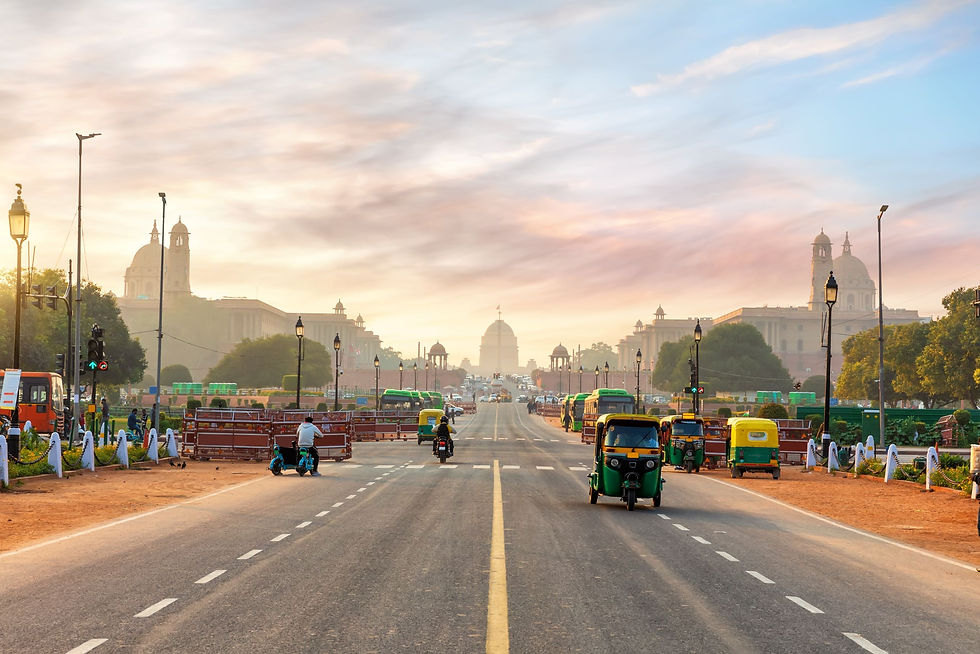
Abbildung 5 Electric tuk tuks have long been part of the inventory of Indian cities. (Source: shutterstock/PradeepGaurs, 2016)

The successes achieved so far also give cause for optimism. The country has succeeded in exceeding its poverty reduction goals and in laying the foundations for a modern, digitalised production sector. With roads and smart cities, new structures are growing out of the ground, opening up new opportunities for the inhabitants. Along with this comes a new hunger for raw materials, which the country has yet to prove it can meet.
From mechanical engineering to medicines and jewellery, the subcontinent has much to offer the world. With the right strategies and smart reforms, India will be able to permanently conquer an important place in the world economy, as befits a country with 1.4 billion inhabitants.
