
Kharkiv: When even the war faded into the background (First published on 21.1.2022)
- Simon Kiwek

- 1. Apr. 2023
- 5 Min. Lesezeit
Aktualisiert: 6. Jan.
Almost a year has passed since the Russian invasion of Ukraine. Just a few months before the attack, the prospect of invasion was a surreal idea for the residents of the city of millions, located 40 kilometers from the Russian border.

Soldiers at Kharkiv train station forecourt

As an important military base 40 kilometers from the Russian border, the presence of the military is a daily sight.
In Eastern Europe, smaller celebrations, and even more so the major ones, are never without pomp and circumstance. Kharkiv, a city of two million inhabitants located just under 40 kilometers from the Russian border, was no exception for New Year's and Christmas. After a devastating wave of COVID-19, the city celebrated the arrival of the new year – which, according to the Orthodox calendar, comes before Christmas on January 7th.
The two boulevards, Pushkinsskaya and Sumska, stretch for several kilometers through the city center, adorned with enormous artificial Christmas trees, cafes, clubs, and snow-covered parks. Despite the freezing temperatures, both boulevards were packed with people.
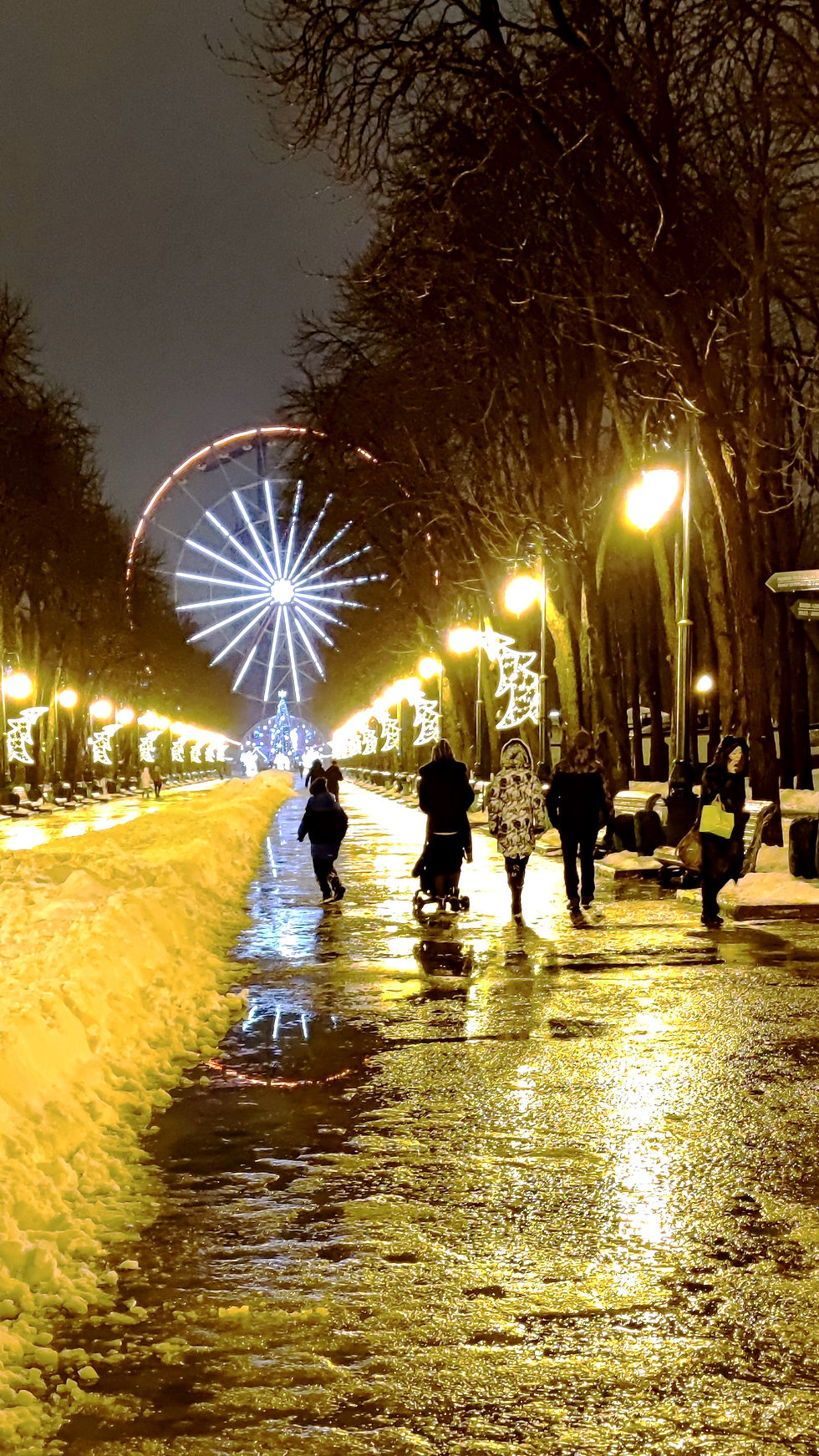
Gorky Park on Pushkinskaya Avenue.
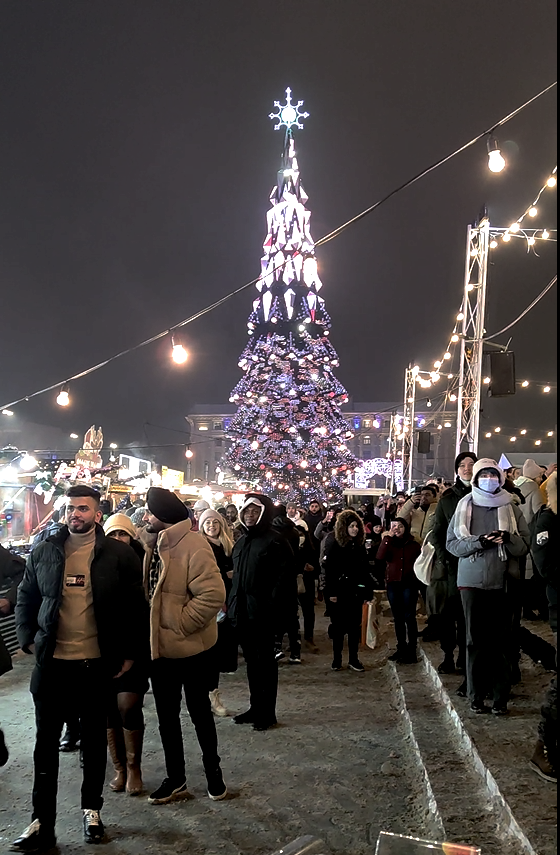
International New Year's Eve in Kharkiv
On New Year's Eve, more students from Bangladesh, India, and Nigeria than Ukrainians are milling about. Besides being the Ukrainian center of heavy industry, Kharkiv is also an international student city. Young Ukrainian women stroll the streets in thick fur coats, the kind usually only seen on older ladies going to the opera. A Christmas classic wafts from loudspeakers on every corner, and the songs play on a loop in restaurants and cafes.

New Year's Eve in Kharkiv
On December 31st, crowds thronged Freedom Square, the largest military parade ground in the former Soviet Union, amidst a small amusement park, mulled wine stalls, and shawarma stands. In 2014, this square had been the scene of clashes between pro-Russian demonstrators and Ukrainian nationalists. Although a significant majority of the population speaks Russian, they could not be mobilized for independence as in the neighboring regions of Luhansk and Donetsk. Instead, a small group stormed a Kharkiv theater, believing it to be a government building. Even today, a small gallery and a rocket that landed here during the conflict in eastern Ukraine serve as reminders of the conflict. Otherwise, the city has remained largely untouched by unrest in recent years.
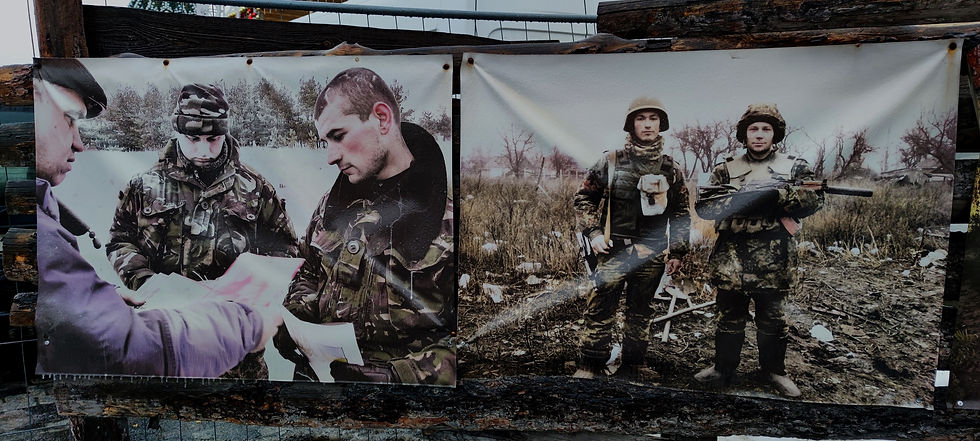
Commemoration at Freedom Square of the war that has been raging in neighboring Donetsk since 2014.

But the city itself was also a target of rocket attacks.
Contrasts characterize the cityscape.
The vibrant, colorful Christmas decorations, shining in every imaginable hue, stand in stark contrast to the often drab streets, where old and dilapidated backyards frequently yawn open behind the facades, jutting out from the entrance gates.

Modern branches of various restaurant and café chains are among the few places that shine even outside the holiday season, standing out amid the bulky buildings left from the communist era.
The temperatures fall below freezing at night, and combined with the thaw during midday, the streets and sidewalks often turn into ankle-deep pools of icy water or glass-smooth sheets of ice. In some places, shop employees try to remove the ice with pickaxes, but this is far from sufficient across the city.
A COVID wave swept through the country from November to December as well, reaching up to 700 deaths per day. Yet the government did not respond with a lockdown. While in Austria people were effectively sent to bed at 10 p.m. on New Year’s Eve, here even department stores remained open late into the night throughout the holidays. COVID measures, where they exist, are perceived more as recommendations than as rules. Only McDonald's consistently checks vaccination certificates. Neither train staff on intercity routes nor security personnel in shopping centers enforce mask requirements or monitor compliance.
In Nikolski, a four-story shopping complex with an international cinema, crowds gather even on the Orthodox Christmas Eve and Christmas Day on January 6 and 7. Long lines of people form between Nike and Adidas stores. The entrance hall is dominated by a shiny DS7 Crossback from the French luxury automobile brand DS. In addition to the iPhone as a status symbol, the Chinese smartphone manufacturer has long since established itself in the Ukrainian market with its high-tech devices and runs large-scale advertising campaigns. With prices at roughly half that of Western competitors, these devices are far more affordable for many people here.
Overall, apart from fashion and technology, not much else is offered.

The restaurant scene is dominated by chains such as Lviv Croissant, a bakery chain; Sushija, which offers sushi; and Mafia, which specializes in Italian cuisine. Frau Müller, a restaurant serving traditional Bavarian dishes like fried pig's ears, even made it onto the scene. The Neu-Bayern district was also founded by German immigrants and still houses a brewery that adheres to the German Purity Law.

At Frau Müller’s, guests are greeted by Soldier Schweik.
A life without COVID and geopolitics
Despite Ukraine’s gradual move toward the West and the European Union, little of the supposed benefits have reached everyday life out here. Still, many locals take pride in showing foreign visitors their own versions of Starbucks-style coffee shops, such as Aroma Kava, as well as numerous burger and sushi places. While the immigrants who lend these cuisines authenticity elsewhere are missing here, young Ukrainians—often after finishing their studies—step in and try to recreate the right atmosphere. Often, one can tell that the country is only at the beginning stages of developing a professional service culture.
Others prefer to imitate alternative and subversive lifestyles and do not even try to get everything right. Like Alex, who thrives as a bartender in a subversive rock bar. The bar has become a popular meeting point for the few Western foreigners in the city, who mingle with Ukrainians curious about what is happening outside their country. On Christmas Eve, Alex managed to bring in a Ukrainian band that played in the dimly lit pub with its hidden smoking room.
Neither here nor anywhere else on the streets does anyone express concern about the 100,000 Russian soldiers stationed just 40 kilometers from the border—troop movements that have international media in a frenzy. Not even COVID, which confronts a particularly underfunded healthcare system where doctors earn barely 300 US dollars a month, seems to be regarded as a major event. It is treated more like the icy weather—something one must endure, but cannot change.
Few people care to talk about it. Instead, they surrender with stoic calm to consumption and the upcoming holidays, even though beneath the surface one senses the quiet unease of people who feel unable to plan for the future.

People are queuing up to stock up on drinking water from the tanker truck.
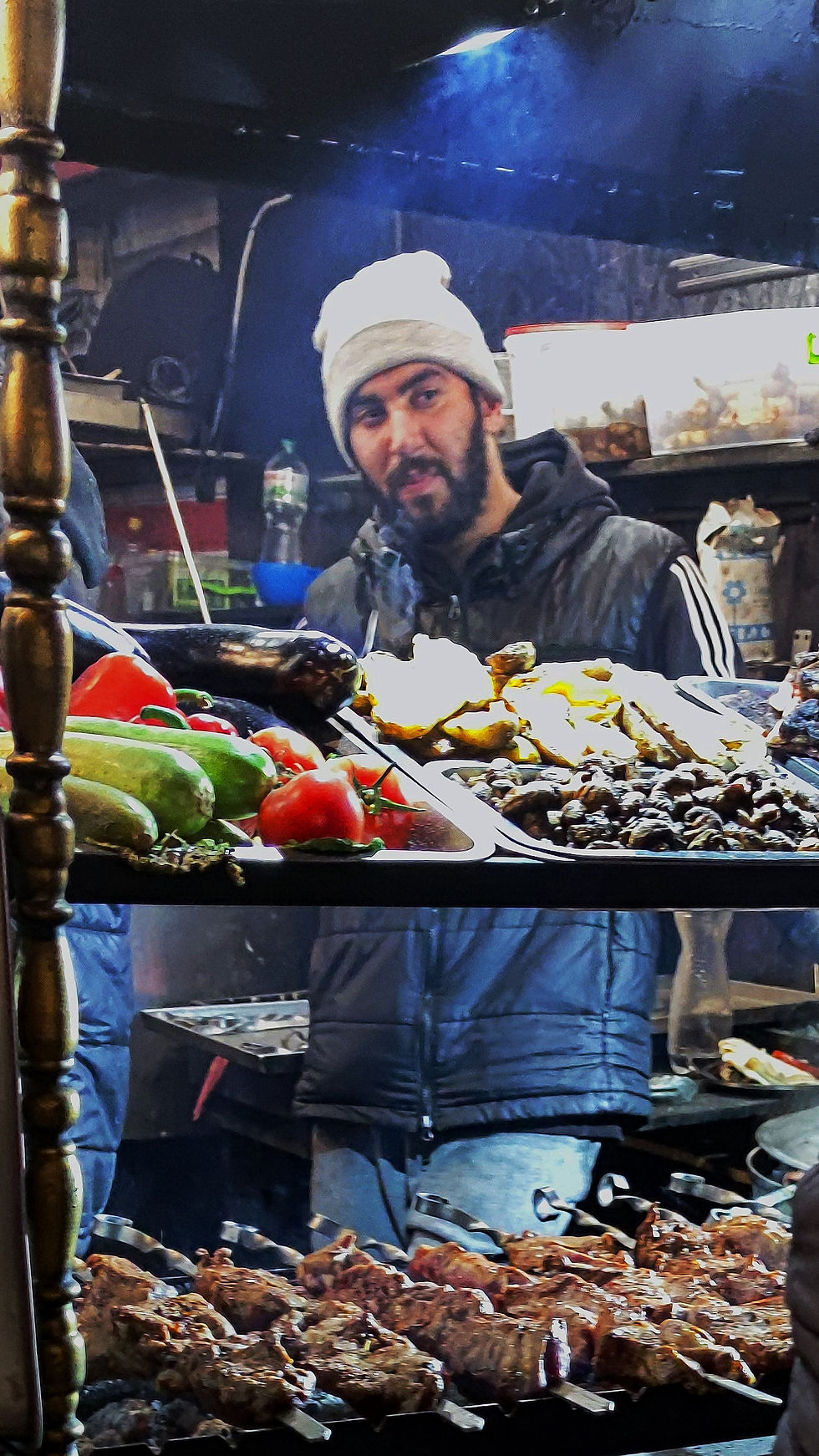
Numerous residents from former Soviet republics can be found at the Christmas market on Freedom Square.

The Terminator's jacket can be found in Kharkiv's Palace Hotel.

Viennese coffeehouse culture 2,000 kilometers from Vienna.

After COVID, record inflation and war – is Ukraine facing its next catastrophe with Thomas Anders?

After COVID, record inflation and war – is Ukraine facing its next catastrophe with Thomas Anders?
